The AI Web Design Hype: Why Clean Code and Real UX Still Win

“I built an award-winning website in two hours with AI.” If you spend any time on YouTube or X, you have seen a version of this headline this week. The demo is always similar: glowing WebGL, a 3D object that follows the cursor, full-screen video, buttery scroll effects. In a ten-second screen recording on a big monitor, it looks like magic.
I use AI every day, so this isn’t a rant against it. But when I open these sites on a phone, turn off the video or press Tab to move through the page, the magic usually disappears. And the clients I talk to have started noticing the same thing. So here is my honest view as a developer: what AI is great at in web design, where it falls short, and why the boring parts of the job matter more than ever.
The short version: AI is a fantastic accelerator for people who already know what a good website needs. It is not a substitute for knowing it. Generating a site takes minutes; making it fast, accessible, easy to edit and actually useful to your customers is still the real work.
What I see when I look under the hood
Whenever someone sends me a site they generated and asks what I think, I run the same few checks. The same patterns come up again and again.
The effects are carrying the whole site
Remove the background video or the WebGL canvas and look at what is left. Often it is a generic headline, three feature cards and a button. The effect was doing the job that content and structure should do: explaining who this is for and why they should care.
The phone version is an afterthought
Mobile is roughly half of all web traffic worldwide (StatCounter puts it at about 49% in August 2026), and for many consumer businesses it is much more. Heavy shaders and video either drain a mid-range phone’s battery or get switched off, and then the page collapses into the same stack of identical cards every other generated site has.
Accessibility is missing
Buttons without names, images without alt text, grey text on grey backgrounds, menus you can’t reach with a keyboard. This isn’t unique to AI; it is what the average web looks like. The WebAIM Million 2026 report found detectable WCAG failures on 95.9% of the top million home pages, with 56 errors per page on average, both worse than the year before. WebAIM even names AI-assisted “vibe coding” among the likely reasons. A model trained on the average web reproduces the average web, problems included.
Nobody owns the code
The first 80% arrives impressively fast. The last 20% is where it gets expensive. Ask the AI to fix a layout bug and it fixes one thing and breaks two others. Ten prompts later you have spent an evening and a pile of tokens, and the CSS is a patchwork nobody understands, including the AI. When the business needs a change six months later, someone has to read that code. Often it is quicker to rewrite it than to debug it.
Where AI really helps
I would be lying if I said I don’t use it. I do, every day, for the parts of the job where speed matters more than judgment:
- Research and first drafts. Summarising documentation, comparing tools, getting a rough outline to react to.
- Boilerplate. Repetitive markup, data transformations, test pages, regular expressions I don’t want to write by hand.
- A second pair of eyes. Reviewing code for edge cases, and checking claims before they go into an article like this one.
- Quick prototypes. For a non-technical founder testing an idea, an AI builder can get a landing page online in an afternoon. For an experiment, that is exactly right.
Notice the common thread: in every case, someone still decides whether the output is good. AI makes a skilled person faster. It doesn’t make an unskilled result good.
A real example: while updating my article on fluid CSS, I tested my own wide-screen formula in a browser and found that it made the zoom button do nothing on large monitors. Nothing generated would have flagged that. Testing did.
Where it falls short
- It doesn’t know your customers. It can’t sit in on a sales call, see which question every client asks, or notice that your visitors drop off at the pricing section. Good UX starts with that knowledge, and it isn’t in any training data.
- It averages. Generated designs are built from the most common patterns on the internet. That is useful for conventions, like where people expect a menu, and fatal for positioning. If your site looks like everyone else’s, you are competing on price.
- It can’t make trade-offs for you. Should the hero have video, or should the page load in one second on 4G? Should the form ask for a phone number? These are business decisions, and the right answer depends on your goals.
Most sites don’t need a spectacle
It is worth remembering what the web actually runs on. According to W3Techs, WordPress powers about 40% of all websites and close to 59% of those built with a known CMS. Most of those sites are built on solid templates with clear content and a simple goal, and for many businesses that is completely fine.
If a standard layout is all you need, a good template adjusted by hand is often faster, cheaper and cleaner than wrestling a generator into shape. Custom work pays off when the website has to do something specific: stand out in a crowded market, explain a complex offer, or turn visitors into leads reliably. That is where generic output stops being enough.
How I work instead
When clients hire me, they aren’t paying for lines of code or clever prompts. They are paying for decisions, made in the right order:
  Business goals
        │
        ▼
  UX: who visits, what they need, what they do next
        │
        ▼
  Visual design that supports that flow
        │
        ▼
  Clean, fast, accessible code
- Structure before pixels. Every section gets a job, its content and a reason to exist before any design starts.
- UX first, aesthetics second. The page should guide people to the next step. Effects are welcome when they help that, and cut when they don’t.
- Code that lasts. Fast on a mid-range phone, passing Core Web Vitals, accessible, and built so your team can edit content without calling me. AI helps me get there faster; it doesn’t decide what “there” is.
Five checks for any website, AI-built or not
Try this on your own site
- Open it on your phone over mobile data. Is it still clear what you offer within five seconds?
- Imagine the effects are gone. Pause the video, scroll without the animation. Is there still a message?
- Press Tab from the top of the page. Can you see where you are and reach every link and button?
- Run it through PageSpeed Insights and look at the mobile Core Web Vitals, not only the desktop score.
- Try to change a headline yourself. If that needs a developer or a prompt session, the site will cost you every time it changes.
FAQ
Can AI build a website for my business?
It can build a first version, and for testing an idea that may be enough. For a site that has to bring in customers for years, you still need someone to define the structure, check accessibility and performance, and make it easy to maintain.
Is AI-generated code bad for SEO?
Not by definition. Search engines care about the result, not who wrote it. The problems are the usual side effects: heavy scripts that slow pages down, missing headings and alt text, and thin, generic content. Those hurt rankings whoever produced them.
Will AI replace web designers and developers?
It is replacing some of the typing. It isn’t replacing the judgment: understanding a business, choosing what to leave out, and taking responsibility for the result. Designers and developers who use AI well will simply get more done.
The takeaway: use AI for speed, research and experiments. Rely on people for strategy, UX and the quality checks that decide whether a site actually works for your customers. The hype will settle; fast, clear, accessible websites will still win.
Got a site, AI-built or otherwise, that looks great but doesn’t bring in leads? Send it to me and I’ll tell you honestly what is holding it back.
Keep reading.
Three more, still opinions, still with numbers attached.
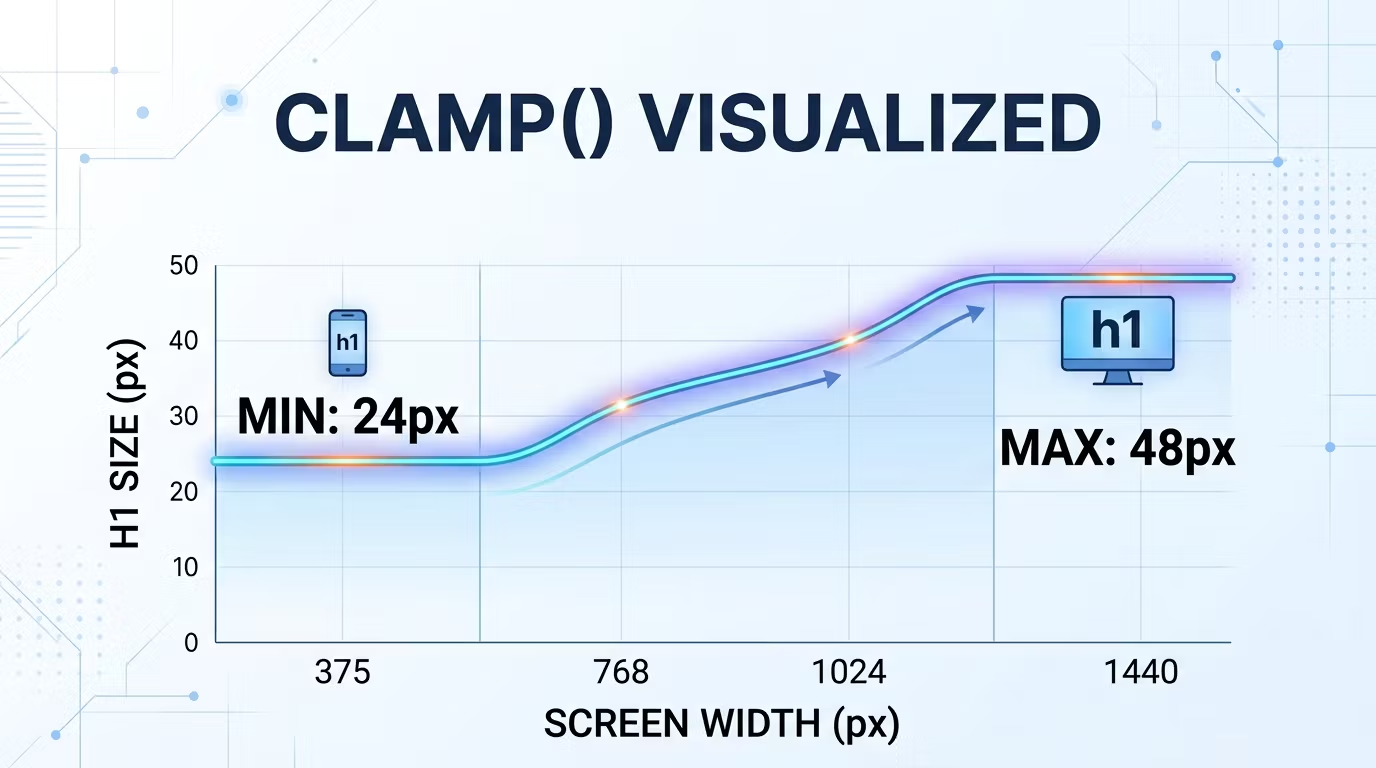
The Death of Media Queries? How clamp() and a Smart Root Scale Make Truly Fluid Websites
Open the stylesheet of a typical website and count the @media blocks. It is not unusual to find dozens: one set of font sizes…
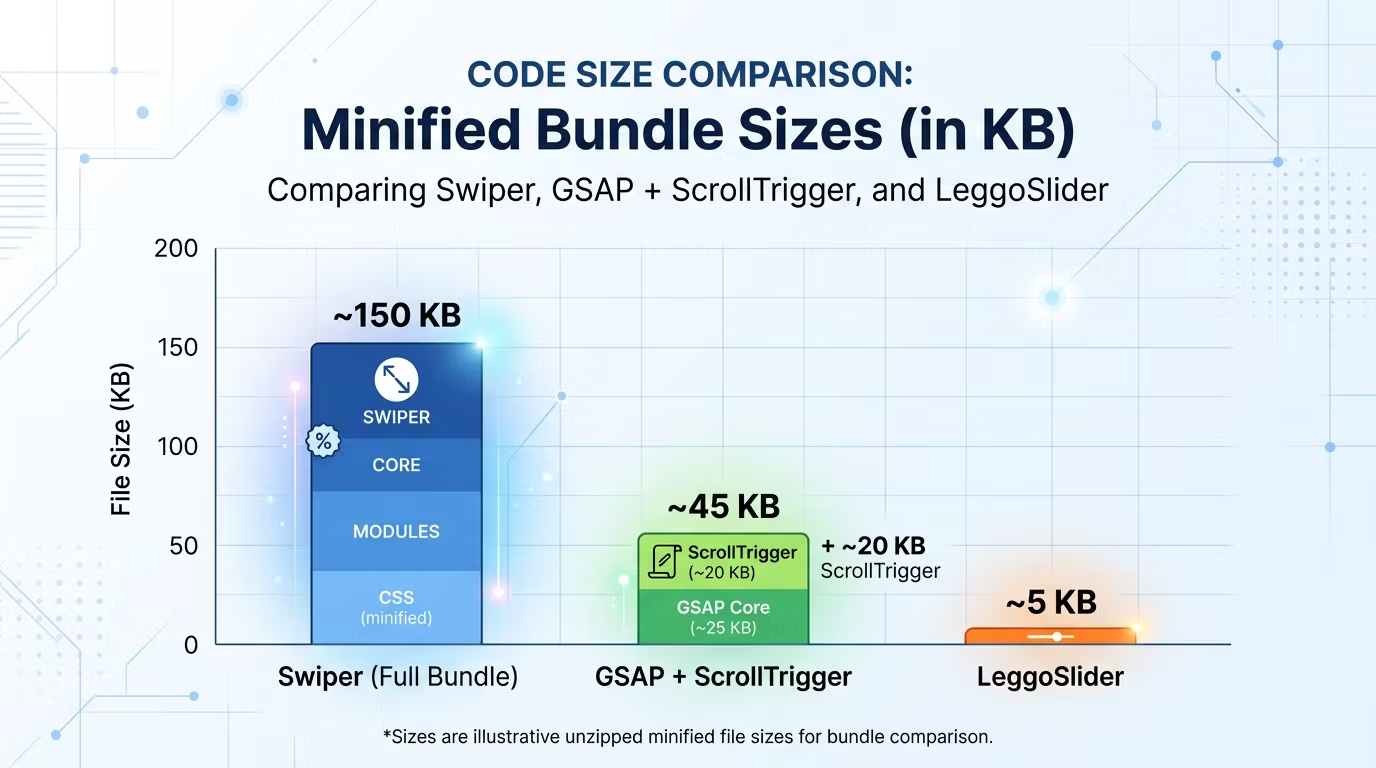
The “Bloated Code” Syndrome: Why I Stopped Reaching for GSAP and Swiper
Open the source of an average corporate website and you will often find the same pair of guests: GSAP for animations and…
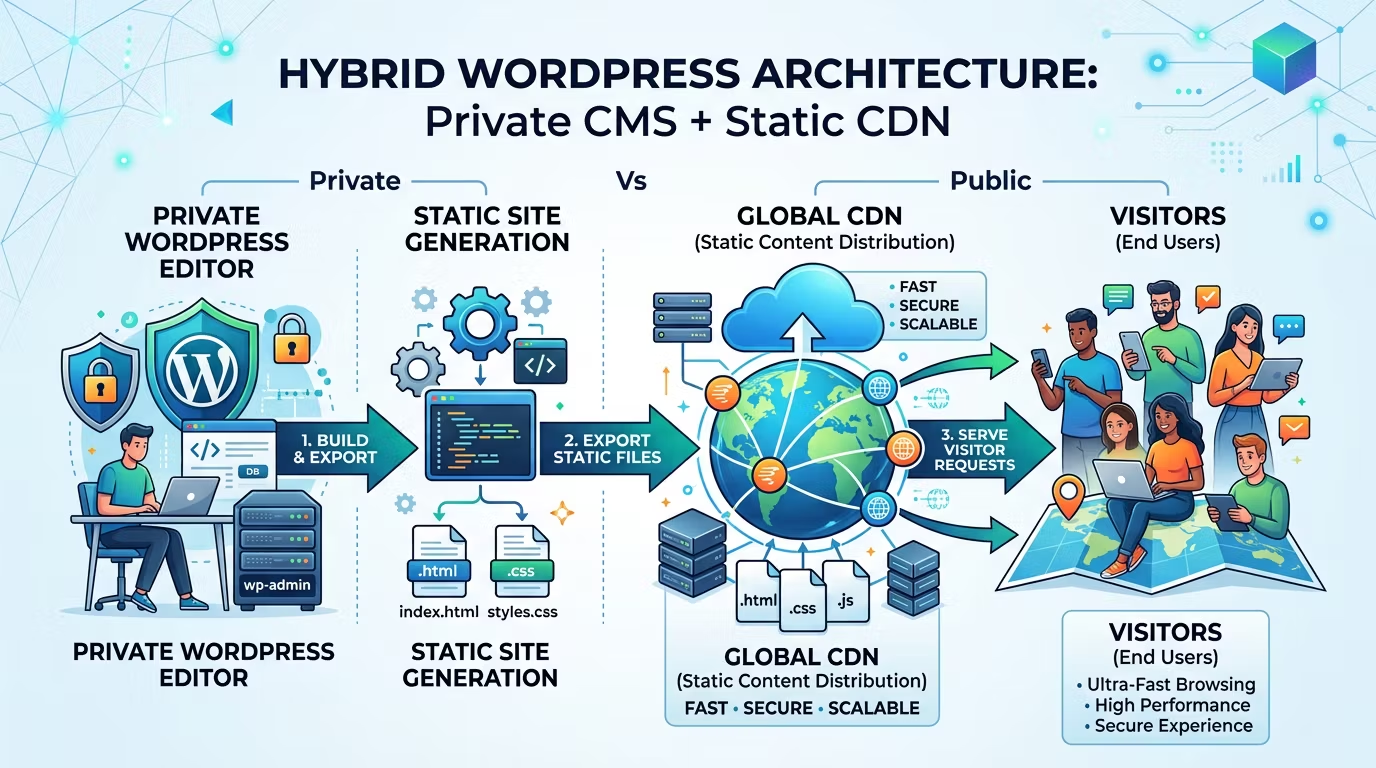
Traditional CMS vs Static Sites: Why I Build Hybrid WordPress
Almost every project I start begins with the same question: “Should we build it on WordPress, go with Webflow, or just make…